MemoHoney Official Website › Articles › Reading the label
Reading the labelWhat the Small Seals on a MemoHoney Bottle Can and Cannot Say
A seal is useful when read as the limited statement it makes. It is not a lab report, a treatment claim, or a personal medical recommendation.
One small seal, one limited claim
The MemoHoney artwork uses several small marks: Manufactured in the USA, GMP, FDA Registered Facility, Non-GMO, Natural Ingredients, Doctor Formulated, Naturally Gluten Free, Dairy Free and Vegetarian. A row of marks is designed to create an overall impression. The useful reading method is slower: treat every mark as a separate sentence, then ask what that sentence actually establishes.
Manufactured in the USA describes where the bottle was filled and packed. GMP concerns how a facility documents and controls its work. A money-back statement is a seller promise with dates and conditions. Those are all potentially useful facts, but they do not turn into a laboratory analysis, a clinical outcome or a personal recommendation merely because they sit together on one image.
That distinction is fair to both sides. The buyer can give a literal claim its proper weight without allowing it to settle a much larger question. The product remains a dietary supplement. Its six named ingredients, the absent amount panel, the return terms and the research on individual ingredients remain separate things to inspect.
| Label mark | What the supplied material says | What it does not establish alone |
|---|---|---|
| Manufactured in the USA | Where the bottle was filled and packed | Origin of every ingredient or a clinical result |
| GMP | Facility procedures and records | An assay of an individual bottle |
| FDA Registered Facility | A facility registration | FDA approval of the supplement |
| Dietary marks | A formulation representation | The evidence level needed for every restriction |
| Doctor Formulated | A packaging statement | A named professional's personal advice |
A statement can be meaningful and still be too narrow to answer a separate safety, quality or health question.
Ask what would make a claim checkable
A practical question is: what record would show that this badge is true? A manufacturing-location statement can be supported by facility records. GMP can be supported by process and audit records. A gluten claim can be explored with a question about testing and a measured result. A current return promise can be checked by asking the order desk how a return is opened and saving the reply.
Some wording has no equally clear test. The supplied note for Natural Ingredients says it has no fixed legal definition that establishes a measurable standard. Doctor Formulated is also thin on detail here: the product materials do not identify the doctor, specialty, role or date. The mark can be accurately reported as a part of the packaging, but it cannot identify the person behind it or their contribution.
This is not a reason to dismiss every seal. It is a reason to match confidence to documentation. A precise, supported claim can stay precise. A broad or undefined phrase may be part of the design, but it should not be allowed to do the work of a Supplement Facts panel, a released assay, or a clinician who knows the buyer.
Dietary badges need the question that fits the need
Naturally Gluten Free, Dairy Free and Vegetarian can be important for reasons that differ sharply from one buyer to the next. A casual preference, a strict dietary practice and a medically significant exposure concern do not require the same level of documentation. The right question is not whether the badge looks convincing. It is whether the detail supplied is enough for the reason this information matters to the particular person.
For this product, the seller page says the capsules are vegetable capsules made from hypromellose. That is useful to someone trying to avoid gelatin. It is not the same thing as a testing record for a buyer with coeliac disease, and it does not answer a question about shared production conditions. The artwork alone does not supply every underlying document.
Before purchase, write the specific question down: the material to avoid, the level of certainty needed, and the record that would settle it. A generic support response cannot add an unprinted amount or a missing test result to the bottle. It can, however, say whether current documentation exists. Keep a written answer with the order record if it changes the decision.
FDA wording is a registration statement, not approval
The FDA Registered Facility roundel is among the marks most likely to be read too broadly. The supplied explanation is narrow: a facility that makes food or supplements for the United States files a registration. It is a listing of the establishment. It does not mean the FDA approved MemoHoney, its formula, or a claim about memory, focus or energy.
That is consistent with the category. Dietary supplements are not pre-approved as drugs, and a label should not be read as a substitute for medical evaluation. The front label says Advanced Memory Support, while the seller's supporting statements remain the seller's structure-and-function claims. No supplied record reports a MemoHoney clinical trial or a trial of all six named ingredients together.
A more useful next step is to read the ingredient page and the testing-and-quality page as different records. One tells a reader the names on the supplied materials and the doses individual studies used. The other explains what this site has and has not been given. Neither becomes an approval by being placed beside an FDA-themed badge.
A formulation badge is not personal care
Doctor Formulated can sound like a recommendation if it is read at speed. The supplied materials do not name a doctor or describe their role. More importantly, a mark on a bottle cannot account for a person's medicine list, blood-pressure history, reactions, or reason for considering a supplement. An unnamed general claim and an individual clinical recommendation are different categories.
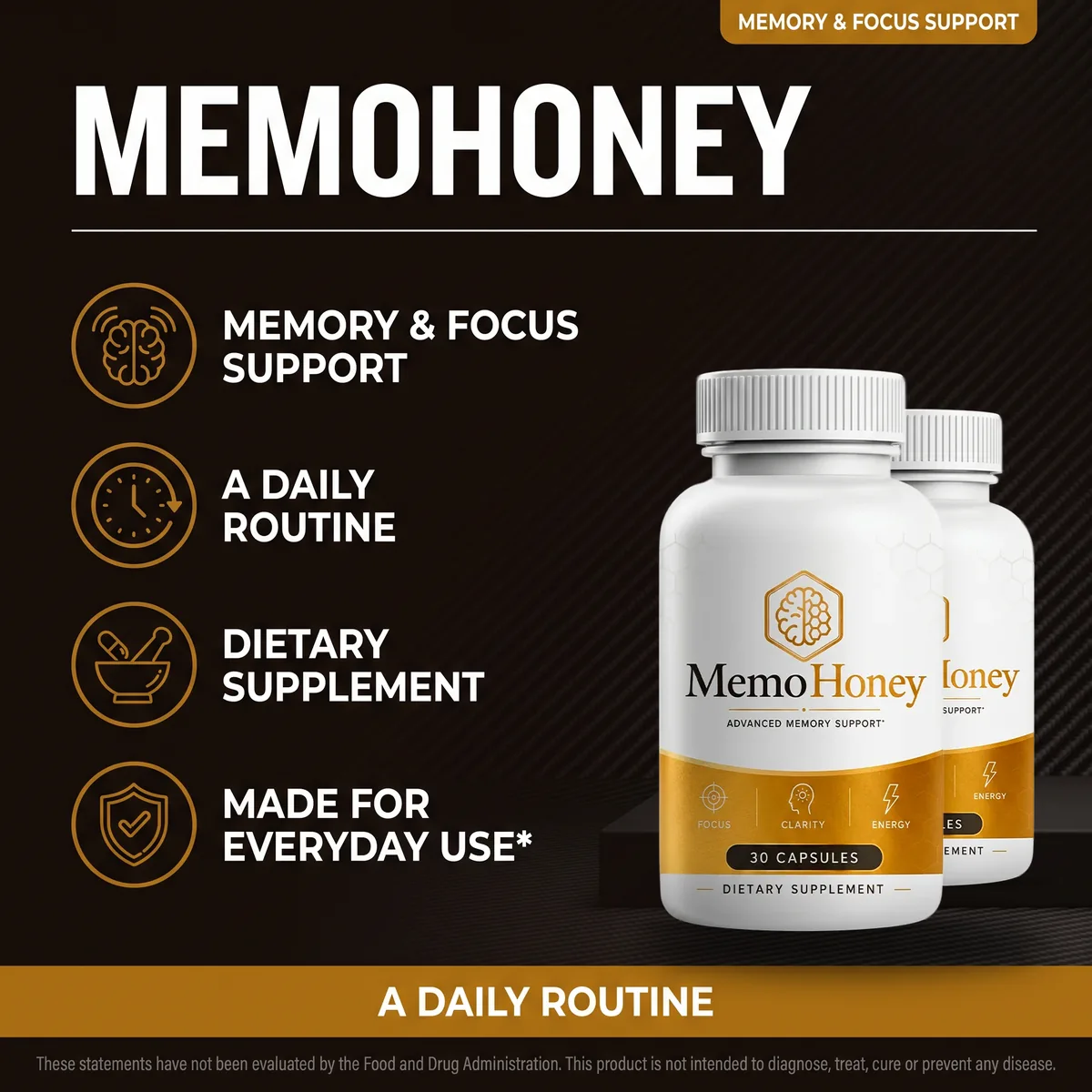
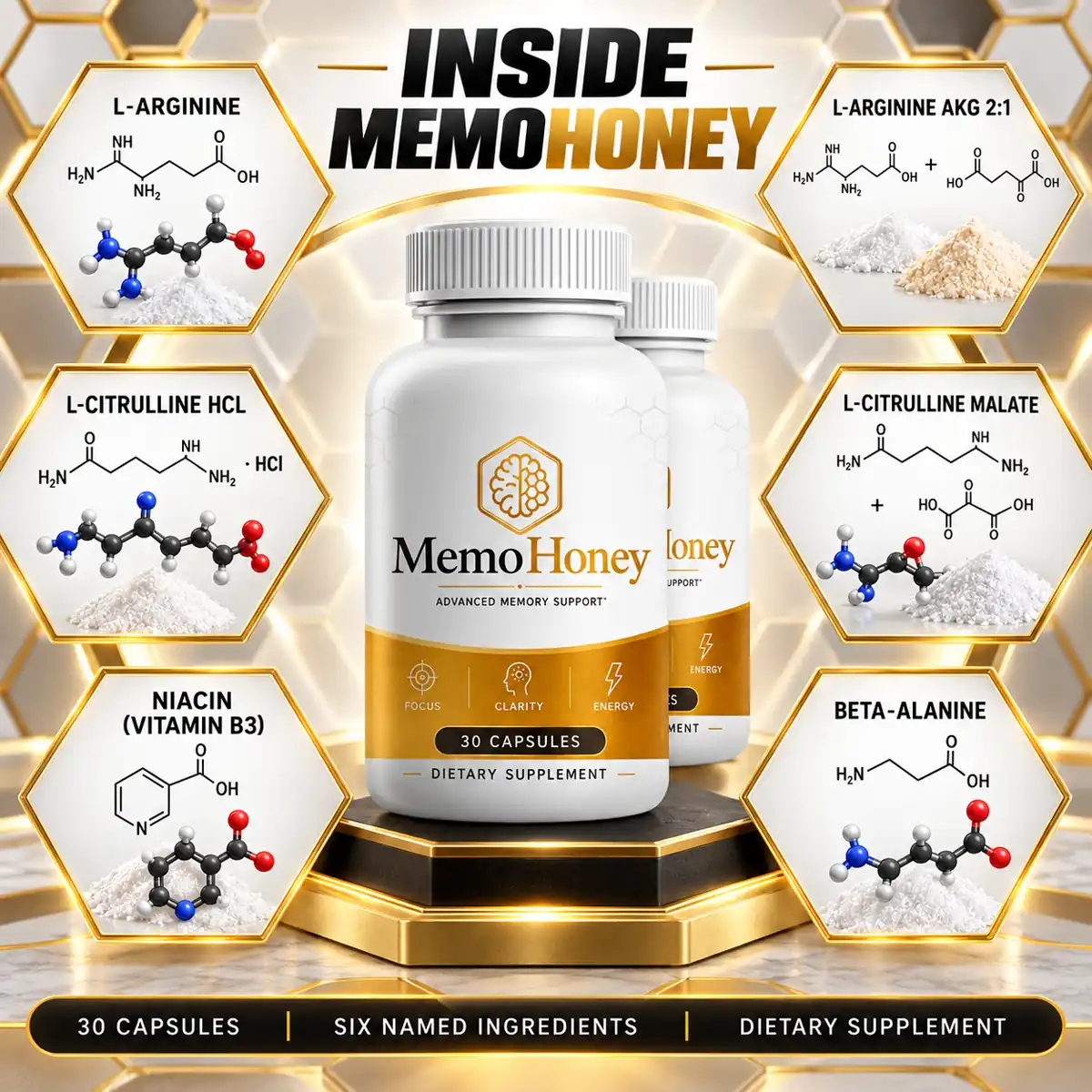
The named ingredients make that difference practical. L-arginine, L-arginine AKG, two forms of citrulline, niacin and beta-alanine appear in the supplied material. Anyone taking a nitrate, a blood-pressure medicine, a blood thinner or a PDE5 inhibitor should bring the actual label to a pharmacist or prescriber before starting, rather than inferring safety from a packaging badge.
The same is true for a change in memory. Trouble carrying out routine tasks, a decline noticed by family, or a sudden change deserves assessment. A supplement site can explain product copy and service terms. It should not let a badge imply diagnosis, treatment, or a reason to postpone appropriate care.
Use a seal as a prompt for a better question
A short buying method is enough. Read the exact words. Find the page or record that supports those words. Ask for a specific document when that would affect the decision. Save any answer with the purchase record. Then decide from what is known rather than from the general feeling produced by a wall of symbols.
The 60-day window starts from the purchase date, not delivery, and the seller asks for 30 days of use before a claim. Those terms make the timing question important before paying. A buyer should not use a badge to avoid reading them, just as a buyer should not use a price reduction to avoid asking whether a dietary statement is documented enough for the use they have in mind.
This approach also permits an uncomplicated decision not to buy. If the necessary testing figure, source detail or named professional is not supplied, the record may simply be incomplete for that buyer. No argument about the product is required. The only conclusion is that the evidence in hand does not settle the question that matters.
Read the MemoHoney label while this is in front of you
Six named ingredients, the amount each published trial used printed beside them, and 60 days from the date of purchase to decide.
Two bottles $158 · six bottles $294 · 60-day money-back guarantee
Order MemoHoney From This CounterLot MEM-26/ME-8302 · one a morning, 30 to a bottle · ships from the United States
Keep the record straight
A small mark, a label line, an order email, a customer-service reply and a study are different kinds of records. A mark can describe how a bottle is presented. A label can identify what the bottle says it contains. An order email can tie a payment to a date. A service reply can describe the next administrative step. A study can report the population, dose and outcome it actually examined. The useful habit is to keep each record in its own lane.
That makes room for a careful no. If the fact that would decide a purchase is not in the supplied record, it is reasonable not to buy. That is not an accusation against the product and it is not a reason to invent a reassuring answer. It is simply the point at which the available evidence stops. A refund window is much easier to use before a payment than after it.
The same distinction matters after a purchase. Keep label and order details for a product or service question. Take medicines, reactions and a change in memory to a pharmacist or clinician, who can evaluate the person rather than a generic product page. A retail record becomes more useful when it is not asked to answer a medical question.
The result is deliberately plain: read the actual words, ask the precise next question, save the answer that applies to the transaction, and let missing evidence remain missing. That is more protective of a buyer than letting a polished badge or a confident paragraph silently become proof of a result it never measured.
- Read every seal as one claim, rather than treating the full set as a general proof.
- Ask which record would verify the detail that matters to you.
- Use specific testing or material information for strict dietary needs.
- Keep a formulation mark separate from medical advice.
- Bring medicines, reactions and memory concerns to a pharmacist or clinician.
MemoHoney is a dietary supplement rather than a treatment, and nothing here is medical advice. A memory change that other people have noticed, or one that has grown steadily worse month on month, deserves an assessment rather than a purchase. MedlinePlus sets out what is worth reporting and to whom.
- Questions and Answers on Dietary Supplements. U.S. Food and Drug Administration. https://www.fda.gov/food/information-consumers-using-dietary-supplements/questions-and-answers-dietary-supplements
- Using Dietary Supplements Wisely. National Center for Complementary and Integrative Health, National Institutes of Health. https://www.nccih.nih.gov/health/using-dietary-supplements-wisely
- Memory. MedlinePlus, U.S. National Library of Medicine. https://medlineplus.gov/memory.html
- Dolan E, Swinton PA, Painelli VS, et al. A Systematic Risk Assessment and Meta-Analysis on the Use of Oral β-Alanine Supplementation. Adv Nutr. 2019;10(3):452-463. PMID 30980076. https://pubmed.ncbi.nlm.nih.gov/30980076/
- Khalaf D, Krüger M, Wehland M, et al. The Effects of Oral l-Arginine and l-Citrulline Supplementation on Blood Pressure. Nutrients. 2019;11(7):1679. PMID 31336573. https://pubmed.ncbi.nlm.nih.gov/31336573/