MemoHoney Official Website › Choosing A Memory Supplement
Choosing A Memory SupplementChoosing A Memory Supplement: Seven Questions, In The Order The Money Moves
Ask them in this order and most bottles are eliminated before the fourth.
Labels are arranged to be read in the order that flatters them: the claim first, the ingredient list second, the price last and the refund terms in a footer. These seven run the other way round, because that is the order in which a purchase can still be stopped.
At the foot of this page, the product sold on this website is scored against all seven, and it loses three of them.
Question one: what is it, in the product's own words?
Form, dose and count, before any adjective. A capsule taken once a morning with thirty to a bottle is a different proposition from a gummy taken twice a day with sixty, and both are different from a powder measured with a scoop.
Form decides three things at once: how much can physically be in a serving, how easy the routine is to keep, and how visible the quantity is. A powder shows you the volume you are swallowing. A capsule conceals it. That is not a criticism of capsules, which are the easiest form to take consistently; it is a reason the next two questions matter more for a capsule than for anything else.
- A single sentence of directions you can repeat from memory.
- A count that maps to a number of days without arithmetic.
- A form named plainly on the front of the container.
Question two: is every ingredient named?
Named, in full, and not pooled behind a proprietary blend. A blend total tells you the weight of a mixture and nothing about its composition, which means a blend can be ninety per cent of its cheapest component and still be accurately labelled.
Watch for the reverse problem as well. On several products in this category the advertising names fewer ingredients than the container does, and the omitted ones are frequently the better-evidenced. Compare the sales page against the label artwork before assuming the two agree.
Count the names on the sales page. Count the names on the label. If the two numbers differ, the label is the fact and the gap is worth understanding before anything else.
Question three: how much of each, and does the amount match the research?
This is the question most bottles fail, and it fails in two different ways. The first is a missing Supplement Facts panel, which leaves no figure to check at all. The second is a printed figure that is a fraction of what any trial used, which is worse in one respect: it looks like disclosure.
The comparison is straightforward once you have both numbers. Look up what the published trials gave, then look at the panel. Citrulline trials run at gram scale — 8.8 g a day in the one that measured cerebrovascular function. Beta-alanine imaging work used 2.4 g a day. Niacin is the opposite case: its supplemental upper intake level is 35 mg a day, which fits in a capsule easily.
A capsule holds a few hundred milligrams of powder in total. Any label claiming several gram-scale ingredients in one capsule is claiming something the format cannot do, whether or not it prints the figures.
Question four: who says it works, and what did they measure?
Follow the citation, not the claim. Three questions settle most of it: was it randomised, what outcome did it measure, and in whom.
The cautionary case in this category is ginkgo, the most-sold botanical on the shelf. The Ginkgo Evaluation of Memory study followed more than three thousand older adults for years and found no reduction in dementia. That is what a properly powered negative result looks like, and it is more informative than a dozen small positive ones.
The encouraging case is the multivitamin. COSMOS-Web and COSMOS-Mind both found small memory improvements against placebo in older adults, which is more than most of this shelf can show and comes from the least glamorous product on it.
A product combining six ingredients has not been tested because each of the six has been tested separately. Interactions, absorption and competition for the same transporters all change at that point, and nobody has measured it.
Question five: what does it cost per day, and per day of what?
Divide the total by the days it buys and compare like with like. A cheaper bottle holding half as many servings is not cheaper.
Then do the second division nobody prints: how many of those days sit inside the refund window. Every pack larger than the window is partly a purchase of days that cannot be returned, and the bigger the discount the more of them there are. That is a fair trade for somebody reordering and a poor one for somebody testing.
Question six: how long have you got to change your mind?
Read three things: the number of days, the date they are counted from, and whether any period of use is required before a claim will be heard.
Counted from purchase is shorter than counted from delivery, because purchase happens first and everything in between comes out of the window. A required period of use is subtracted from the front of it. Between those two, a window advertised as two months can leave a month of genuinely usable time, and the usable month is the number to plan around.
| What the terms say | What it means in practice |
|---|---|
| 60 days from purchase | Handling and transit are inside the window |
| 60 days from delivery | Longer, and less common. Read it twice before relying on it |
| 30 days of use required first | The first half of the window is spent qualifying to use the second |
| Return postage paid by the buyer | A real cost on a heavy multi-bottle return |
| Claims by telephone only | Fine, as long as the number is answered. Test it before buying |
All five of these appear on real offers in this category, frequently in combination.
Question seven: who answers the telephone?
A refund route that is a web form and a promise is not a route. Before paying, find the number, check what hours it is answered, and work out which desk it reaches: the one that can see an order, or the one that can edit a website.
That distinction sounds pedantic until a claim is due. An editorial address cannot look up a purchase, so a request sent there can only be forwarded, and a forwarded request loses days on a deadline that does not move.
The seven questions scored against MemoHoney
| Question | Score | Why |
|---|---|---|
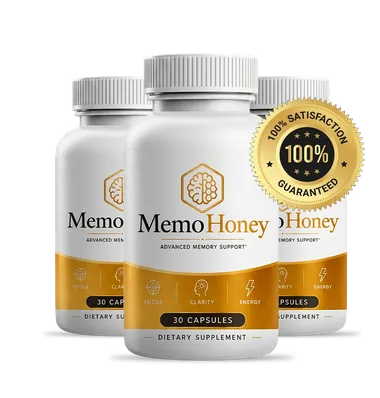
| 1. What is it, in its own words? | Pass | Capsule, one a morning before food, 30 to a bottle. Printed plainly on the front |
| 2. Is every ingredient named? | Pass | Six names in full, no proprietary blend, and the tile graphic agrees with the typed list |
| 3. How much of each? | Fail | No Supplement Facts panel in the supplied artwork. No amount for any of the six |
| 4. Who says it works? | Fail | No trial of this product and none of the six together. The ingredient trials measured other outcomes at gram scale |
| 5. Cost per day? | Pass | $1.63 to $2.63 a day depending on the rung, charged once with no subscription. Worked out here |
| 6. How long to change your mind? | Fail | 60 days from purchase is fair, but 30 days of use is asked for first and return postage is the buyer’s |
| 7. Who answers the telephone? | Pass | +1 (302) 200-3480, a named order desk, with a named return address in New York |
Four passes, three fails. Printed here rather than buried, because a checklist a product cannot fail is not a checklist.
Question six is scored a fail rather than a pass on a technicality worth stating: the window itself is honest and clearly worded, and the two conditions attached to it — the use period and the postage — are the kind of detail that decides whether a guarantee is usable. The full guarantee page works it through.
Sources behind these seven questions
Nine references. Two of them describe what a properly powered negative result looks like.
- Li A, Li H, Chen J. The effects of L-citrulline supplementation on cerebrovascular function during sprint interval training in taekwondo athletes. J Exerc Sci Fit. 2025;23(3):222-228. PMID 40474881. https://pubmed.ncbi.nlm.nih.gov/40474881/
- Ostfeld I, Zamir A, Ben-Zeev T, et al. β-Alanine supplementation improves fractional anisotropy scores in the hippocampus and amygdala in 60-80-year-old men and women. Exp Gerontol. 2024;194:112513. PMID 38971131. https://pubmed.ncbi.nlm.nih.gov/38971131/
- Minto C, Vecchio MG, Lamprecht M, et al. Definition of a tolerable upper intake level of niacin: a systematic review and meta-analysis of the dose-dependent effects of nicotinamide and nicotinic acid supplementation. Nutr Rev. 2017;75(6):471-490. PMID 28541582. https://pubmed.ncbi.nlm.nih.gov/28541582/
- DeKosky ST, Williamson JD, Fitzpatrick AL, et al. Ginkgo biloba for prevention of dementia: a randomized controlled trial. JAMA. 2008;300(19):2253-62. PMID 19017911. https://pubmed.ncbi.nlm.nih.gov/19017911/
- Yeung LK, Alschuler DM, Wall M, et al. Multivitamin Supplementation Improves Memory in Older Adults: A Randomized Clinical Trial. Am J Clin Nutr. 2023;118(1):273-282. PMID 37244291. https://pubmed.ncbi.nlm.nih.gov/37244291/
- Baker LD, Manson JE, Rapp SR, et al. Effects of cocoa extract and a multivitamin on cognitive function: A randomized clinical trial. Alzheimers Dement. 2023;19(4):1308-1319. PMID 36102337. https://pubmed.ncbi.nlm.nih.gov/36102337/
- Cohen PA, Avula B, Khan I. The unapproved drug centrophenoxine (meclofenoxate) in cognitive enhancement dietary supplements. Clin Toxicol (Phila). 2022;60(10):1156-1158. PMID 35959800. https://pubmed.ncbi.nlm.nih.gov/35959800/
- Questions and Answers on Dietary Supplements. U.S. Food and Drug Administration. https://www.fda.gov/food/information-consumers-using-dietary-supplements/questions-and-answers-dietary-supplements
- Using Dietary Supplements Wisely. National Center for Complementary and Integrative Health, National Institutes of Health. https://www.nccih.nih.gov/health/using-dietary-supplements-wisely
Order MemoHoney having scored it yourself
Four of seven, with the three failures printed in the same table as the four passes, and 60 days from the date of purchase to test the conclusion.
Two bottles $158 · six bottles $294 · 60-day money-back guarantee
Order MemoHoney From This CounterLot MEM-26/ME-8302 · one a morning, 30 to a bottle · ships from the United States